

Preparing Commercial Spaces for Renovation and Growth
Businesses grow, rebrand, change hands, and evolve, and the spaces they occupy have to keep up. Whether a new tenant is moving in or an owner is reimagining an existing layout, there comes a point where the current interior simply has to go. That’s where commercial interior demolition comes in. It’s not wrecking balls and rubble; it’s a deliberate, controlled process of removing what’s no longer working (walls, ceilings, fixtures, outdated systems) while leaving the structure exactly as it needs to be. When it’s done right, everything that comes next has a clean foundation to build on.
Across Raleigh and the broader Wake County area, investment in commercial space is accelerating and shows no signs of slowing. Office building, retail center, restaurant, medical office, and industrial facility owners throughout the region are upgrading their existing assets to stay competitive and meet the needs of their tenants, customers, and teams. The Monster Demolition crew has worked alongside those property owners long enough to understand exactly how much a clean, well-planned demo shapes the quality of everything that follows.
What Is Commercial Interior Demolition?
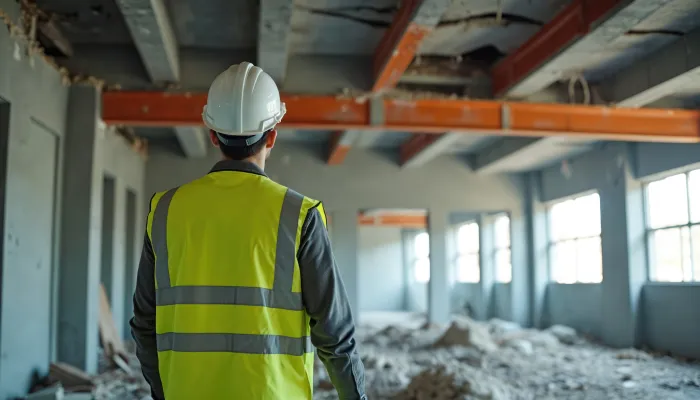
Commercial interior demolition is the selective removal of non-structural components from inside a building: partition walls, drop ceilings, flooring systems, and built-in fixtures, while leaving the structure itself completely untouched. Unlike a full teardown, interior demolition is targeted work. The goal is to clear out what’s outdated, worn, or no longer fit for purpose so the space can be rebuilt from a clean slate.
Commercial interior demolition projects commonly involve:
- Office spaces
- Retail stores
- Restaurants
- Warehouses
- Medical offices
- Industrial facilities
- Multi-tenant commercial buildings
- Professional service offices
Work can cover walls, flooring, ceilings, fixtures, built-in features, mechanical systems, and anything standing between the current state and what the owner or tenant actually needs. The result is a clean, ready-to-build interior with critical systems protected and disruption held to a minimum.
Why Businesses Across Raleigh Are Renovating Existing Commercial Properties
Raleigh’s growth has been hard to ignore: new businesses moving in, established companies expanding, and a steady push for commercial spaces that reflect how people work and shop today. Rather than packing up and relocating, many business owners are finding that renovation makes more sense: it’s faster, less disruptive, and keeps them rooted in the markets they’ve already built.
Common renovation projects include:
- Office reconfigurations
- Tenant improvements
- Retail remodels
- Restaurant updates
- Medical facility upgrades
- Industrial workspace modifications
- Property repositioning projects
From Downtown Raleigh and North Hills to Cary, Garner, Wake Forest, and communities in between, businesses are investing in their properties rather than walking away from them. Professional interior demolition is what makes those renovations possible; it’s the step that clears the way for everything that follows.
The Business Cost of Improper Demolition
Commercial renovation projects run on tight schedules, and there’s very little room for surprises. When demolition is poorly planned or rushed, the problems don’t stay contained to the demolition phase; they ripple forward and affect every trade that comes after.
We’ve seen projects experience delays because of:
- Damaged utilities
- Incomplete demolition work
- Missed building conditions
- Safety concerns
- Poor debris management
- Unanticipated repair needs
For business owners, those delays have real consequences: pushed occupancy dates, contractor scheduling conflicts, and costs that climb while work stands still. Every day a commercial space sits unavailable is a day of lost momentum. Starting with professional demolition reduces that risk, because the project begins on solid footing from day one.
Common Commercial Interior Demolition Projects
No two commercial demolition projects look exactly alike; the scope, challenges, and approach all vary depending on the property type and what the renovation calls for.
Office Renovations
The way people use office space has shifted, and many Raleigh businesses are redesigning their floors to keep up with opening up collaborative areas, rethinking layouts for hybrid teams, and updating worn interiors. That usually means pulling out cubicle systems, partitions, conference room walls, flooring, and finishes that have run their course.
Retail Store Remodels
Retail spaces need to evolve as brands change and customer expectations shift. Interior demolition clears the way for new store layouts, updated displays, fresh fixtures, and the kind of environment that keeps customers coming back.
Restaurant Renovations
Restaurant demolition calls for a more careful approach. Commercial kitchens, plumbing systems, ventilation equipment, and dining areas all require coordination to be removed without creating downstream problems. The right team gets the space ready for renovation without creating problems for the subsequent construction.
Medical and Professional Offices
Medical and professional offices renovate for a range of reasons: updated equipment, improved patient flow, compliance requirements, or simply because the space no longer matches how the practice operates. Interior demolition supports those upgrades while keeping the building’s critical infrastructure protected throughout.
Warehouses and Industrial Facilities
Warehouses and industrial facilities rarely remain static; operations expand, equipment changes, and layouts that worked five years ago may no longer work today. Professional demolition opens up the interior flexibility those modifications require, without compromising the building envelope or disrupting ongoing operations more than necessary.
What We Commonly Discover During Commercial Interior Demolition
One of the most practical advantages of professional demolition is what it turns up before construction ever starts. Commercial buildings carry history past tenants, previous renovations, systems that were patched rather than fixed, and the demolition phase is often when that history comes to light.
Some of the most common discoveries include:
- Abandoned utility lines
- Outdated electrical systems
- Improper previous renovations
- Hidden water damage
- Code compliance concerns
- Structural modifications from past tenants
- Plumbing issues concealed behind walls
Catching these issues early gives property owners the chance to address them before new finishes, equipment, or tenant improvements are installed on top of them. In that sense, the demolition phase often serves as a comprehensive diagnostic, revealing the building’s actual condition before the next major investment is made. Over the years, we’ve found that commercial buildings often tell a very different story behind finished walls than they do during an initial walkthrough. In office buildings throughout Raleigh and Wake County, it’s common to uncover abandoned electrical lines from previous tenants, undocumented plumbing modifications, aging infrastructure, and repairs completed years ago that no longer meet current standards. Discovering these issues during demolition gives property owners an opportunity to address concerns before investing in new construction and finishes.
Minimizing Disruption During Commercial Demolition
Commercial demolition carries more moving parts than a residential project. Property owners, active tenants, employees, contractors, and visitors may all be in close proximity to the work, which means every decision about scheduling, site access, and dust control has a real impact on people’s day-to-day operations.
Successful commercial demolition often requires:
- Detailed planning
- Site coordination
- Dust control measures
- Debris management
- Safety barriers
- Strategic scheduling
- Clear communication
When the situation calls for it, demolition work can be scheduled around active business operations. Phased work, off-hours access, and clear site boundaries all help keep the project moving without shutting a business down. The goal is always a safe, organized site that respects everyone working in or around the space.
Not Every Commercial Demolition Project Is the Same
Every commercial property has its own set of conditions, and assuming a one-size-fits-all approach is one of the fastest ways to run into problems. An office renovation in Downtown Raleigh doesn’t look like a retail remodel in Cary or a warehouse modification in Garner; the building age, layout, systems, and access constraints all factor in from the start.
Factors that influence demolition planning include:
- Building age
- Occupancy status
- Existing utilities
- Structural design
- Previous renovations
- Access limitations
- Construction schedules
Experienced demolition contractors work through these variables before a single tool hits a wall because the upfront planning keeps the project efficient and on track once work begins.
Why Early Demolition Coordination Matters
The commercial renovation projects that go smoothest are almost always the ones where demolition was brought into the conversation early, not as an afterthought, but as part of the planning from the beginning.
Interior demolition often involves coordination among:
- Property owners
- Architects
- Engineers
- General contractors
- Facility managers
- Business owners
Early coordination gives the full project team architects, engineers, contractors, and facility managers a shared understanding of what the demolition will involve before schedules are locked in. Potential obstacles get identified and addressed while there’s still time to adjust, rather than surfacing mid-project when the cost of adapting is much higher.
What Business Owners Should Know Before Starting a Commercial Renovation
Most commercial renovations are planned around the finish line: new offices, updated retail space, better customer flow, expanded operations. What gets less attention is how much the demolition phase influences whether any of that goes smoothly. A well-executed demo uncovers what’s hiding in the walls, sharpens the project plan, and hands the construction team a space they can actually work with. For property owners, that translates directly into fewer surprises and tighter control over budget and timeline.
Why Commercial Renovations Often Take Longer Than Expected
Few things frustrate a Raleigh business owner more than watching a renovation timeline stretch past what was promised. Construction delays have many causes, but demolition is where many of them first surface: hidden utility lines, previous tenant modifications, outdated electrical systems, and unforeseen structural conditions. None of that is visible during a walkthrough. Professional demolition brings it into the open early, while the project team still has room to adapt before reconstruction locks decisions in place.
Choosing the Right Commercial Demolition Contractor in Raleigh
Commercial interior demolition is a specialized discipline, and not every contractor is equipped for it. Businesses benefit from working with a contractor who has real experience in active commercial environments — someone who understands building systems, knows how to protect what needs to stay, and can work around the operational realities of a live or partially occupied property.
Important considerations include:
- Proper licensing and insurance
- Commercial demolition experience
- Safety procedures
- Communication practices
- Site cleanup capabilities
- Project planning expertise
The right demolition contractor brings more to the project than equipment and labor — they bring the expertise to set the entire renovation up for a clean start.
Why Raleigh Businesses Trust Monster Demolition
Monster Demolition serves commercial clients throughout Raleigh, Cary, Garner, and the surrounding North Carolina communities.
Our team works with:
- Business owners
- Property managers
- Developers
- General contractors
- Facility managers
- Commercial property investors
Timelines matter. Safety matters. So does clear communication and a site that’s actually ready for the work that follows. Whether the project is a retail remodel, office renovation, restaurant update, or industrial facility modification, the mission is the same: execute a clean, efficient demolition that keeps the broader project on track.
Final Thoughts
Commercial interior demolition is the work that makes renovation possible — not just clearing walls and hauling debris, but creating the conditions for everything that comes next to go right. When it’s planned carefully and executed by people who know what they’re doing, contractors move faster, timelines hold, and the finished result actually reflects what the business set out to build. Contact us today to see how we can help with your next renovation project.
